
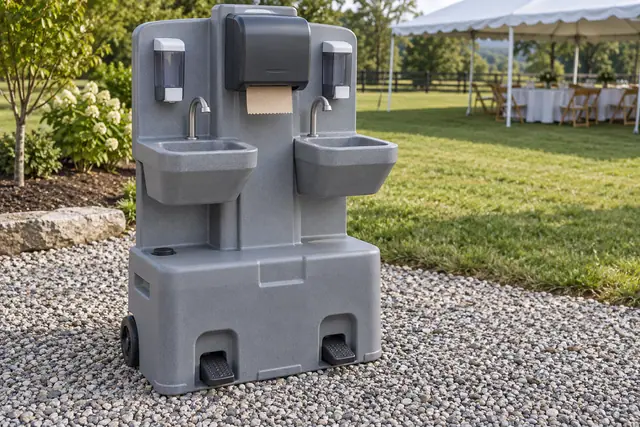
Match the station to personal washing
Ask about the actual basin, normal operating control, clean-water provision, soap and drying arrangement. A sanitizing dispenser and a washing station are different products. Explain who will use the equipment and any functional access needs. If the task involves washing utensils, paint equipment or other materials, state that separately rather than assuming a personal-washing unit can accept it.
Place washing at a useful point in the activity
People returning from outdoor work or taking a break should be able to identify the intended station without walking through an active loading area. At a gathering, consider the route between toilets, food and seating while keeping circulation open. Discuss the position with the property contact and supplier. A basin hidden among event storage is less useful even if it appears on the equipment order.
Make supplies and collection part of the request
Explain the use period and ask who supplies and replenishes the agreed consumables and water. Confirm how used water is contained and serviced. A nearby drain, irrigation point or hose is not automatically an approved connection. Do not empty tanks onto the ground or improvise a refill arrangement; seek the provider’s instructions if supplies or operation become a concern.
Check the complete provision before guests arrive
Have the responsible contact understand the normal controls, the intended use and the reporting route. Confirm that directions lead people to the station actually available to them. Give the specific Longmont location and activity details for a reviewed proposal, including any period when people remain on site before or after the main event.
Questions before you book
Is a hand-sanitizer dispenser the same as a portable washing station?
No. Explain the hygiene function required and ask for the actual equipment and supplies that provide it.