
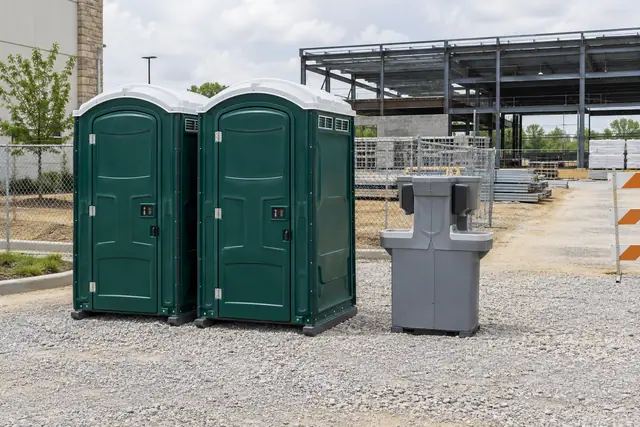
Provide ordinary worker facilities from the outset
Explain the trades working on site, their working periods and the permanent bathrooms they are permitted to use. Standard cabins are a practical starting point, with suitable access features and washing discussed explicitly. Ask about care under the actual use rather than assuming a single timetable suits every project. The request should describe people needing a bathroom, not process washing or disposal of jobsite liquids.
Protect the facility from becoming a storage corner
A delivery of lumber, packaged materials or fencing can take over the approach to an otherwise suitable toilet. Coordinate the accepted restroom position with the contractor’s material laydown plan. Keep the doorway and the agreed service approach out of storage areas. Do not use the unit itself to hold tools, loose supplies or signage that interferes with its operation.
Respond to an access conflict through the responsible people
If a later delivery blocks the equipment, tell the site lead and provider what has changed. Clearing ordinary site materials through the contractor is different from moving the rented toilet. The provider must review any relocation or revised service approach. Avoid instructing workers to climb around stored material or cross an active loading operation to reach the facility.
Carry the arrangement into the daily site brief
Identify who can report supply needs, changed use or an access problem. Include the accepted hire period and eventual collection in the request. A useful Longmont proposal should connect the chosen equipment with the contractor’s actual work layout, so sanitation remains a working facility rather than a forgotten delivery item.
Questions before you book
Can construction supplies be stored against the toilet until needed?
Keep the door and agreed access clear. Ask the contractor to manage material storage and involve the provider if the accepted equipment position needs to change.