
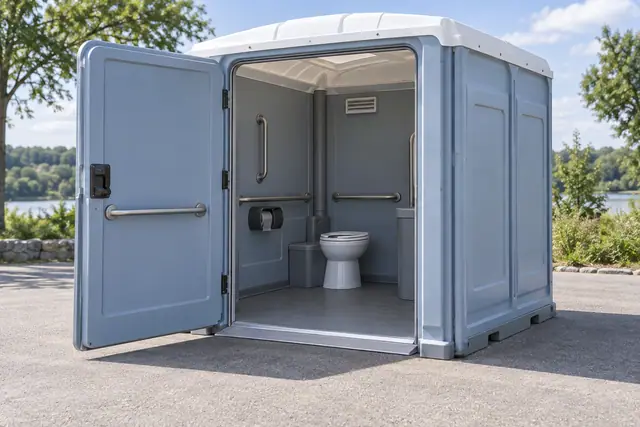
Ask functional questions about the proposed model
Request relevant information about the entrance, interior space, controls and support features. If someone has a particular access requirement, describe the function needed without sharing unnecessary medical details. Include washing in the discussion rather than treating the toilet as the entire bathroom arrangement. The provider should identify the equipment actually proposed, not substitute an unrelated specification from a sample photograph.
Keep ordinary use understandable
Ask how the door, latch and other normal controls operate, especially when the model is unfamiliar to organisers. Use accurate provider information to explain the facility to guests. Do not attach homemade handles, alter closing mechanisms or modify supports to solve a concern. If a function appears unsuitable or damaged, seek the provider’s guidance and review a usable alternative rather than promising that an improvised change will work.
Plan the approach as part of the facility
Discuss the route from the occupied area, entry clearance and the effect of nearby queues or event furniture. A suitable unit should not be positioned where guests must negotiate loose equipment or a service vehicle’s working area. The property operator and provider need to agree on the setting. Location information should be clear in words as well as any colour-coded event map.
Confirm what guests can rely on
Before the gathering, communicate verified features and the accepted location. Keep a contact available to report an obstructed route or functional problem. Ask about the actual equipment, care and dates for the Longmont address; neither a category page nor a general accessibility symbol certifies every temporary site arrangement.
Questions before you book
Can the organiser modify a door control to make a unit easier to use?
Do not modify rented equipment. Describe the concern to the provider and discuss the appropriate model, instructions or alternative arrangement.